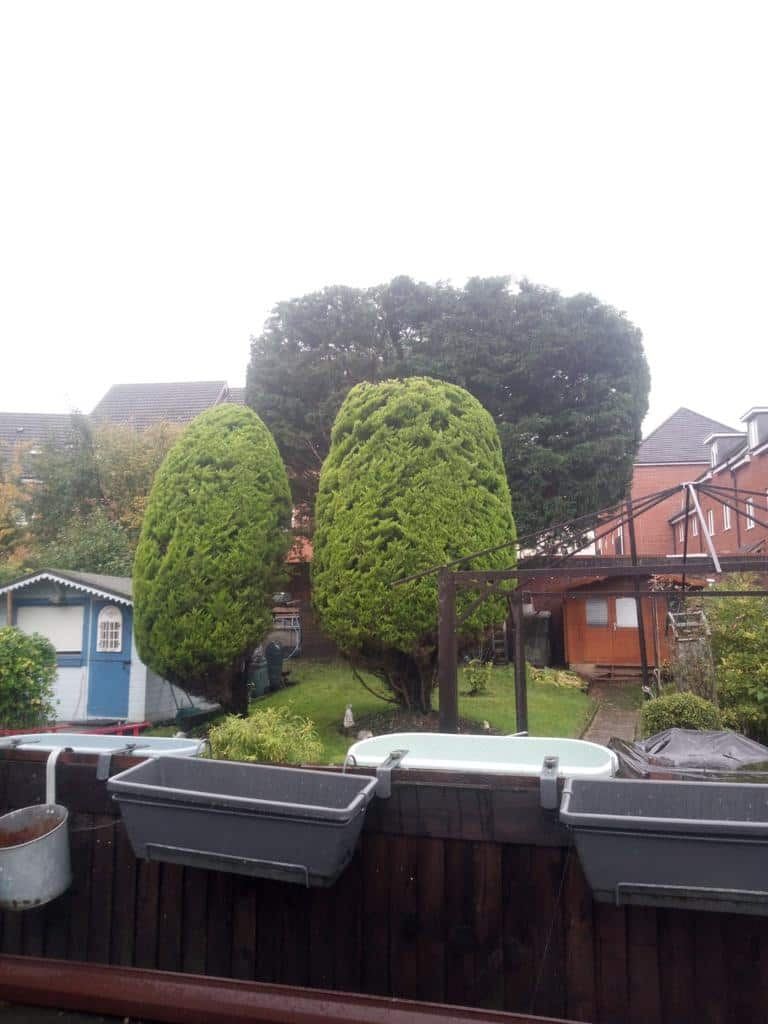
Tree cutting, pruning and trimming are terms that are often used interchangeably, but they do not always describe the same type of tree work. Understanding the difference is important because trees should not simply be cut back without considering their condition, structure and future growth. The right approach depends on why the work is needed and what will provide the most appropriate result for the tree and its surroundings.
For homeowners in Chichester, West Sussex, professional tree surgery provides a considered approach to managing trees, ensuring that any cutting, pruning or trimming is carried out with a clear purpose.
What Does Tree Cutting Mean?
Tree cutting is a broad term rather than a specific arboricultural technique. It can refer to removing branches, reducing sections of a tree or, in some circumstances, removing the tree itself.
When homeowners say that a tree needs “cutting back”, they may actually require a more specific service such as:
- Crown reduction
- Crown lifting
- Deadwood removal
- Selective pruning
- Tree reshaping
- Tree felling
A professional assessment helps establish exactly what work is required rather than simply removing branches without a clear objective.
What Is Tree Pruning?
Tree pruning is a more precise process involving the selective removal of particular branches or sections of growth.
Rather than simply making a tree smaller, pruning can be carried out to improve its structure, manage damaged growth or maintain appropriate clearance.
Professional pruning may be used to:
- Remove dead or damaged branches
- Address crossing or unsuitable growth
- Improve structural balance
- Manage overextended limbs
- Maintain clearance from surrounding features
- Encourage a more appropriate growth pattern
The emphasis is on selecting individual branches carefully rather than cutting indiscriminately.
What Is Tree Trimming?
Tree trimming generally refers to managing outer growth to maintain a particular size, shape or appearance.
The term is frequently associated with smaller trees, ornamental planting and hedges where maintaining a neat outline is an important objective.
Trimming may be appropriate where growth has become untidy or is beginning to interfere with surrounding garden areas. However, larger established trees usually require a more carefully planned pruning method rather than simply having their outer branches shortened.
Pruning Focuses on Individual Branches
One of the main differences between pruning and general trimming is the level of selectivity involved.
Before pruning a mature tree, an experienced tree surgeon considers:
- Which branches genuinely require attention
- Where each cut should be made
- How much growth should be retained
- The balance of the remaining crown
- How the tree is likely to respond
This makes pruning particularly valuable when managing established trees where long-term structure is important.
Trimming Is Often More Appearance-Focused
Trimming is commonly carried out when the primary objective is maintaining a tidy or controlled shape.
For example, smaller ornamental trees may develop vigorous outer growth that affects their appearance without necessarily presenting a structural problem. Selective trimming can help restore a more defined form.
The important distinction is that trees should still be treated according to their species and natural growth habit. Repeatedly cutting everything back to the same outline is not necessarily appropriate for every tree.
Where Does Crown Reduction Fit In?
Crown reduction is a specific form of professional pruning used when the overall height or spread of a tree needs to be decreased.
Rather than randomly shortening branches, suitable growth points are selected throughout the canopy. This allows the crown to be reduced while retaining a balanced and recognisable natural shape.
Crown reduction may be considered where:
- A tree has become too large for its setting
- Long branches require careful management
- The canopy is dominating the available garden space
- Structural concerns make selective reduction beneficial
It requires significantly more planning than simply cutting the outer branches shorter.
Crown Thinning Is Different Again
Crown thinning selectively removes branches throughout the canopy without substantially reducing its overall height or spread.
The objective may be to:
- Reduce excessive canopy density
- Improve light penetration
- Improve air movement
- Reduce the amount of foliage exposed to wind
Because branches are selected from throughout the crown, the finished tree should retain its original overall shape.
Crown Lifting Manages Lower Branches
Another form of pruning is crown lifting, which concentrates on the lower portion of the canopy.
Selected lower branches may be removed to provide greater clearance beneath the tree. This can be useful where branches are interfering with garden access, paths or other frequently used spaces.
As with any tree surgery, the amount removed needs to be carefully considered to avoid creating an unbalanced structure.
Why Random Tree Cutting Can Cause Problems
Removing branches without understanding how the tree is structured can produce poor results.
Indiscriminate cutting may lead to:
- An unbalanced canopy
- Excessive removal of healthy foliage
- Unnatural appearance
- Vigorous unwanted regrowth
- Large, unnecessary pruning wounds
- Future structural concerns
Good tree surgery aims to solve a specific problem while retaining as much appropriate healthy growth as possible.
The Right Technique Depends on the Tree
There is no single pruning method suitable for every situation.
Professional tree surgeons consider factors including:
- Tree species
- Age
- Health
- Size
- Branch structure
- Previous pruning
- Position within the garden
- Reason for the proposed work
Sometimes relatively minor pruning is sufficient. In other circumstances, crown reduction, deadwood removal or more extensive tree surgery may be appropriate.
Why Professional Assessment Adds Value
A homeowner may recognise that a tree has become too large or untidy without knowing exactly which type of work it requires.
This is where professional advice becomes valuable.
An experienced tree surgeon can identify whether the objective is primarily about appearance, clearance, structural management or the removal of damaged growth. The appropriate technique can then be selected rather than treating every tree in the same way.
Why Choose LM Tree Surgery Chichester?
At LM Tree Surgery Chichester, we provide professional tree cutting, pruning, trimming and wider tree surgery services throughout Chichester, West Sussex. We assess each tree individually before recommending work, considering its structure, condition, surroundings and the reason intervention is required.
Our approach focuses on purposeful tree management rather than unnecessary cutting, helping homeowners maintain trees that are appropriately sized, well balanced and sympathetic to the surrounding garden.
Conclusion
Although tree cutting, pruning and trimming are sometimes treated as interchangeable terms, there are important differences. Tree cutting is a broad description covering many types of work, pruning involves carefully selecting particular branches for removal, while trimming is generally associated with controlling outer growth and maintaining appearance.
The best technique depends entirely on the individual tree and what needs to be achieved. For homeowners in Chichester, West Sussex, professional tree surgery ensures that branches are not simply removed at random but managed according to the tree’s structure and future development.
If you have a tree that has become overgrown, unbalanced or difficult to manage, LM Tree Surgery Chichester can assess it and recommend the most appropriate form of professional tree care.
Call us on: 01243 974 685
Click here to find out more about LM Tree Surgery Chichester
Click here to complete our contact form and see how we can help with your tree needs.