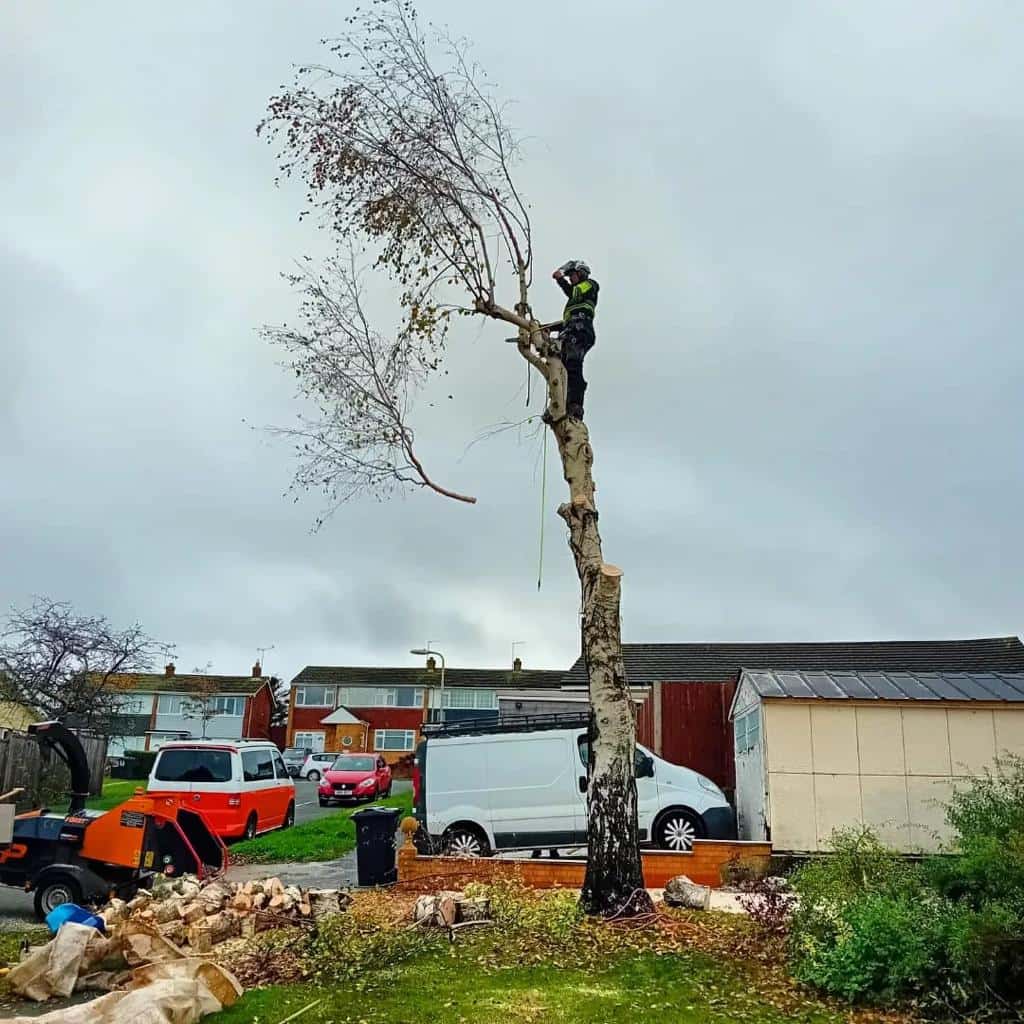
Strong winds can place considerable strain on garden trees, particularly those with damaged branches, weak unions or dense, unbalanced crowns. Although no tree can be made completely resistant to severe weather, regular professional maintenance can identify avoidable weaknesses and reduce the likelihood of preventable branch failure.
Effective tree care is not about removing large amounts of growth. It involves assessing the whole tree and carrying out selective work that supports a balanced structure while retaining healthy branches wherever possible.
How Tree Maintenance Can Improve Storm Resilience
Identifying Weaknesses Before the Weather Changes
Some structural defects are easy to overlook from ground level. A tree may appear healthy while containing split branches, decayed sections or weak unions hidden by foliage.
A professional inspection can identify warning signs such as:
- Dead or partially detached branches
- Cracks where limbs join the main stem
- Cavities and areas of decay
- Crossing or rubbing branches
- Heavy limbs with excessive end weight
- Previous pruning wounds that have deteriorated
- Sudden leaning or changes in the canopy
- Branches caught within neighbouring growth
Finding these issues early provides an opportunity to manage them before strong winds place the tree under additional pressure.
Removing Dead or Unstable Branches
Dead wood no longer responds to movement in the same way as living tissue. It can become dry, brittle and increasingly prone to breaking, particularly during windy conditions.
Partially broken branches can be equally unpredictable. They may remain lodged within the canopy after separating from the tree, creating a risk even when they are not immediately visible from below.
Professional removal clears unstable material in a controlled manner while avoiding unnecessary damage to healthy parts of the crown.
Reducing Excessive Weight on Vulnerable Limbs
Long, overextended branches can carry significant weight towards their tips. Wind increases the force acting on these limbs, placing additional strain on their attachment points.
Selective reduction can shorten suitable branches and bring their weight closer to the main structure. This may be beneficial where a limb has become disproportionately long, extends towards a building or is connected by a weak union.
Cuts must be carefully positioned and kept proportionate to the tree. Excessive pruning can remove too much foliage, create large wounds and encourage weak regrowth.
Maintaining a Balanced Crown
An uneven canopy may cause one side of a tree to experience greater wind loading than the other. Imbalance can develop naturally or result from storm damage, restricted growing space or previous pruning.
Crown balancing and selective pruning can improve weight distribution without destroying the tree’s natural shape. A balanced canopy may respond more evenly to strong winds and place less concentrated pressure on vulnerable branches.
Improving Clearance Around Property
Branches growing directly above roofs, sheds, fences, parking areas and frequently used parts of a garden may cause damage if they break. Limbs that already touch a building can also scrape against roofing materials, guttering or walls during windy weather.
Planned trimming can create suitable clearance while retaining the tree as an important garden feature. Addressing encroaching branches before they become excessively large often allows for smaller, more precise cuts.
Managing Dense or Conflicting Growth
A crowded crown may contain branches that rub against one another as the tree moves. Repeated contact can damage bark and weaken the affected wood over time.
Selective thinning may improve the arrangement of branches and remove damaged, crossing or poorly positioned growth. However, thinning must be carried out carefully. Removing too much inner growth can leave the remaining branches overly exposed and alter how wind passes through the crown.
Why Routine Topping Is Not the Answer
Reducing storm-related risk does not mean cutting every tree back heavily. Indiscriminate topping removes major sections of the crown without considering suitable pruning points.
This can leave large wounds and encourage clusters of rapid regrowth with weaker attachments. The tree may eventually become more difficult to manage rather than more resilient.
Professional tree maintenance uses selective cuts based on branch structure, species, condition and the tree’s surroundings.
The Importance of Checking the Whole Tree
Branches are only one part of a tree’s stability. A useful assessment also considers the trunk, major unions, visible roots and surrounding ground.
Warning signs such as new cracks in the soil, movement around the root plate, fungal growth, cavities or a developing lean may indicate concerns that pruning alone cannot resolve. Examining the whole tree helps determine whether maintenance, closer monitoring or more substantial work is appropriate.
When Should Trees Be Inspected?
There is no single maintenance schedule suitable for every tree. Age, species, size, condition and location all influence how frequently attention may be required.
An assessment is particularly worthwhile when:
- A tree has not been checked for several years
- Large branches extend over buildings or access areas
- Previous storm damage is visible
- The canopy has become heavily unbalanced
- Dead wood is appearing regularly
- Cracks, decay or unusual movement have been noticed
- Major landscaping or ground changes have occurred nearby
Trees should also be visually checked after strong winds, as fresh damage may not be obvious immediately.
Conclusion
Regular tree maintenance can reduce storm-related damage by identifying weak branches, correcting excessive end weight, improving clearance and maintaining a more balanced crown. It cannot guarantee that a tree will remain unaffected during extreme weather, but it can address defects that might otherwise make failure more likely.
LM Tree Surgery Chichester provides professional tree inspections, pruning and maintenance in Chichester, West Sussex. If you are concerned about overextended, damaged or unbalanced branches, contact our team to arrange an assessment and discuss suitable tree care.
Call us on: 01243 974 685
Click here to find out more about LM Tree Surgery Chichester
Click here to complete our contact form and see how we can help with your tree needs.